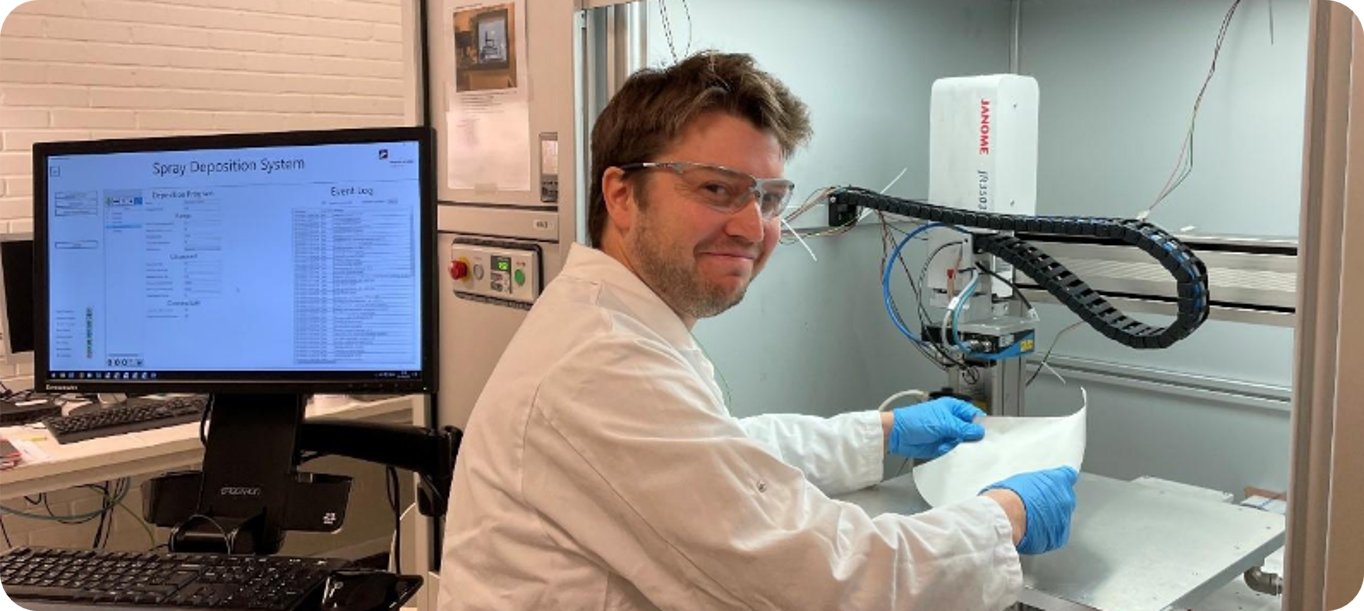
DTI leading the way in electrodes upscaling & material characterization
At DTI, we have been busy ramping up our capabilities towards the capacity needed for the demonstration stack. We have successfully upscaled our spray coating procedure to being able to handle 400 cm2 and 900 cm2 electrodes, while also experimenting with new electrode materials for the small-scale electrode tests.
In parallel, we have been expanding our material characterization testing capabilities, using FTIR to analyze the gas produced during operation of the Nitrolyzer, establishing cross-compatibility testing protocols for gasket and cell materials, and we are building a custom electrochemical cell to measure electrolyte conductivity and stability.
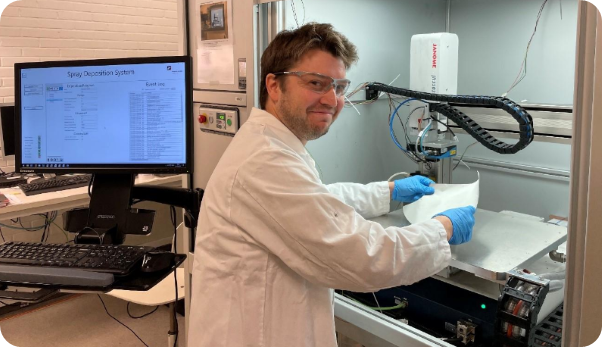
SDU energizing the Nitrolyzer stacks with appropriate power supplies, cables and protection electronics
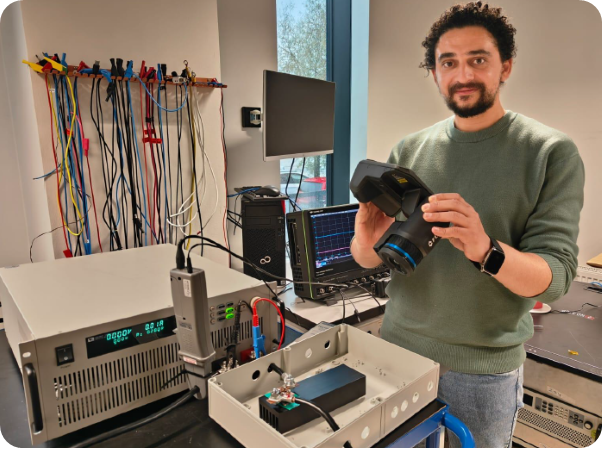
The SDU team is delighted to share some warm news for this cold season. Our team has successfully finalized the design and selection of the programmable DC power supplies to energize the NitroBox stacks. We also completed extensive cable testing at 100 A and 2 kW pulsed power, selecting the optimal cable length and cross-section area to minimize stray inductance, voltage drops, and unwanted oscillations. In parallel, we prepared a comprehensive system power budget to verify site readiness and define the final specifications for protection components, ensuring the safety of our valuable system.
DTI guiding the NitroBox through risk and safety
Under the guidance of DTI, we are actively progressing on our safety and systems analysis fronts. We've initiated a comprehensive risk assessment, rigorously adhering to the essential health and safety requirements outlined in the machinery directive, thereby ensuring the NitroBox is not just powerful, but perfectly safe and compliant! This crucial step is vital for systematically identifying and mitigating potential hazards associated with the system's operation.
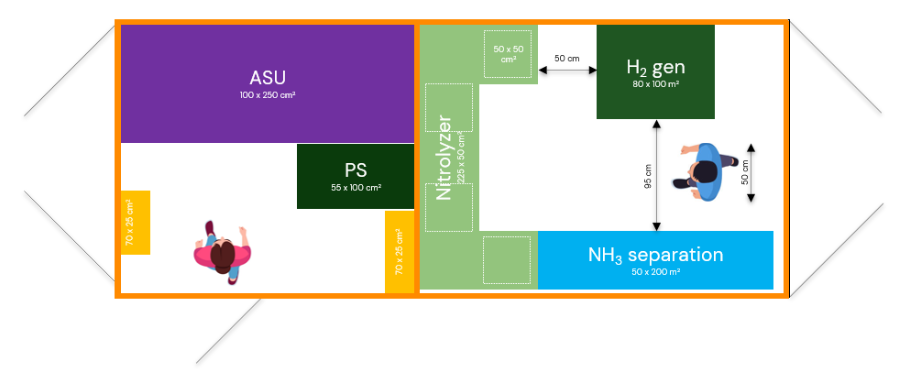
In parallel, we've zoned our container and executed a preliminary hazard area classification for the container housing the system. This classification is a foundational requirement, which we are using to precisely define the minimum necessary specifications for both the ventilation flow rate and velocity. This ensures proper air exchange and control over any potentially hazardous atmospheres, guaranteeing a safe operating environment.
What’s Next?
Next quarter, we’ll share:
- First test results from running the Nitrolyzer at relevant conditions.
- Carbon footprint analysis of green ammonia from our system.
- Preliminary electrical grid side considerations for the NitroBox.
The road to climate-smart, farmer-driven fertilizer is unfolding fast, and NitroBox is leading the way.
Best regards,
The NitroBox Project Team


.png)
.svg)

.png)